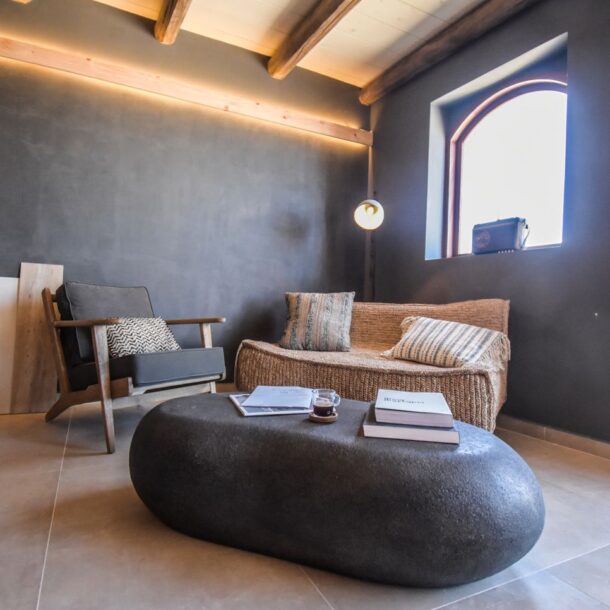
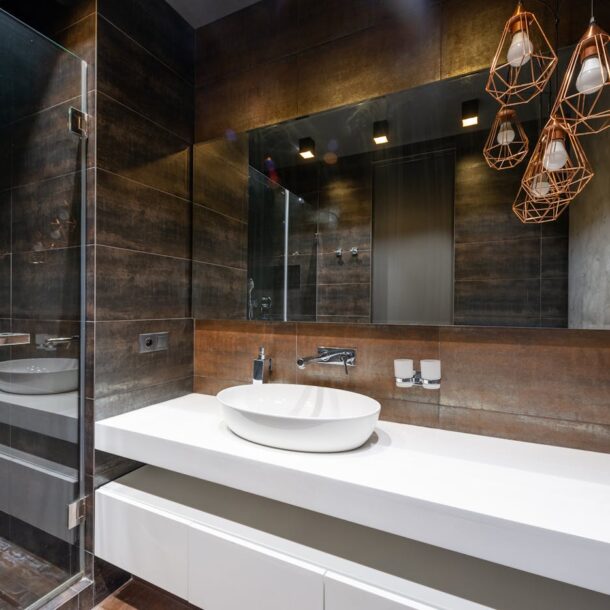

There’s a quiet elegance in a perfectly polished tadelakt wall. Seamless. Silken. Almost impossibly smooth. This ancient Moroccan plaster finish brings a natural, organic quality to interiors that few materials can rival. But beneath its effortless beauty lies a complex, highly skilled craft – a meticulous art that takes years to master.
As the UK’s original tadelakt specialists, we understand just how much care and technique go into every layer. In this article, we explore the traditional artistry, the materials, and the steps involved in achieving that signature tadelakt sheen – and why true luxury lies in the hands that apply it.
An Ancient Craft
Tadelakt is more than a plaster finish; it’s a centuries-old tradition rooted in Moroccan architecture. Originally used to waterproof hammams, palaces and riads, its name comes from the Arabic word “dalaka”, meaning “to rub in” or “to massage”. This motion of rubbing is central to the finish itself, as the plaster is polished and compacted using smooth stones to create a dense, water-resistant surface.
What sets tadelakt apart from other lime plasters is its unique composition and curing process. Made from natural hydraulic lime, it reacts with water and air to form a strong, long-lasting surface – one that is both breathable and durable. The traditional recipe has changed little over the centuries, and modern applications still honour this artisanal heritage.
While the tools are simple, mastery comes from experience. The artisan must work intuitively, adjusting pressure, angle, and timing with each pass.
Overcoming Challenges
Achieving a flawless tadelakt finish is not without its challenges. Cracking, discolouration, or uneven textures can all occur if the application is rushed or imprecise. Environmental factors like humidity, temperature, and absorbency of the substrate must all be accounted for.
This is why the hand of a skilled artisan is essential. Years of experience allow for the fine-tuning required at every stage. Knowing exactly when to begin polishing, how much pressure to apply, or how to correct small imperfections without disrupting the surface – these are the nuances that separate adequate from exceptional.
Craftsmanship as Luxury
In an age of mass production and surface-level aesthetics, true craftsmanship stands out. Tadelakt is not painted on or rolled out. It is shaped, coaxed, and polished by hand. Every curve, every reflection, every movement in the surface is the result of human touch and intention.
At Decor Tadelakt, we work exclusively with artisans who have spent years perfecting their technique. Our finishes are never formulaic. Each one responds to the space it inhabits – whether it’s a sculptural bath surround, a softly curved wall, or a monolithic fireplace. The result is always tactile, seamless, and quietly luxurious.
A Finish That Ages Gracefully
One of tadelakt’s defining qualities is its ability to age beautifully. Over time, its patina softens, deepens, and becomes even more characterful. Small marks or variations are not flaws; they are reminders of the natural materials and human hands that shaped them.
This longevity is part of what makes tadelakt ideal for both contemporary and traditional interiors. It offers not just visual harmony, but also a deeper connection to craft, materiality, and time.
Final Thoughts
A seamless tadelakt finish is never accidental. It is the product of tradition, skill, and sensitivity to material. From the careful preparation of the surface to the final sweep of a polishing stone, each stage is an act of craftsmanship.
Whether you’re considering tadelakt for a bathroom, kitchen, or feature wall, remember that its luxury lies not just in how it looks, but in how it is made. And when created by expert hands, it becomes more than a finish – it becomes an experience.
Contact us to bring this timeless finish into your space, crafted to perfection.